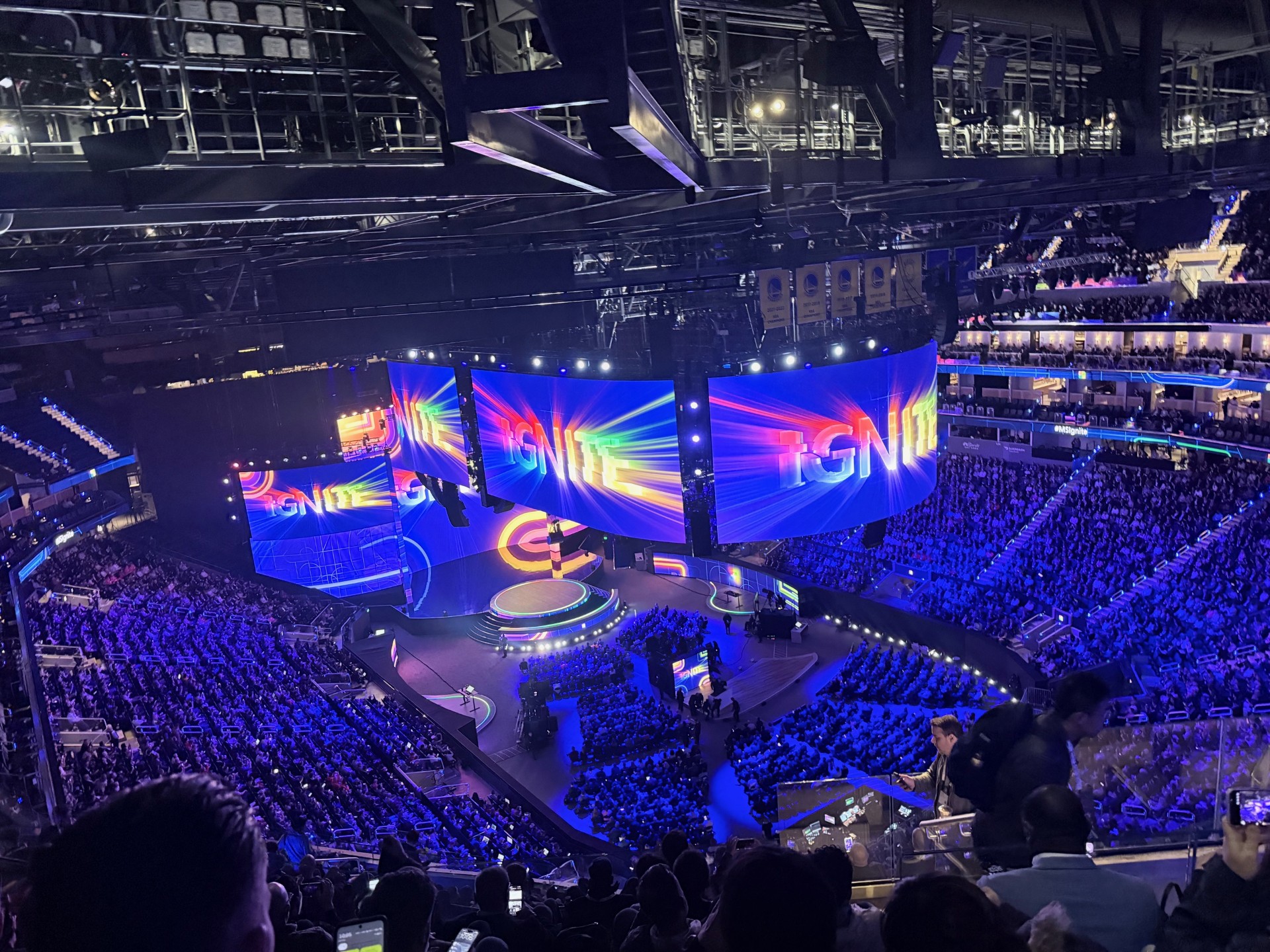
Sitting in the keynote at Microsoft Ignite this year, watching demo after demo, I kept having the same thought: the future isn’t coming. It’s here.
When Satya Nadella became CEO in February 2014, he set out to change how Microsoft thought, not just what it built. He moved the culture from “know-it-all” to “learn-it-all,” and he opened the company up to partners and open source in ways that would have been hard to picture a few years earlier. Then he made a long bet on AI: $1 billion into OpenAI in 2019, another $2 billion in 2021 and more than $10 billion in 2023. A year ago at Ignite, Microsoft introduced the Frontier Firm. This year, Satya took it a step further with the frontier ecosystem, built on three ideas: human ambition, organizational intelligence and trust.
The demos made it real. Copilot Workspaces showed people and their agents working toward a shared goal with shared context, AI going truly multiplayer. Satya described developers moving from writing software to building the software factories that write it. None of it felt like a glimpse of some distant future. It felt like a look at next quarter.
My degree is in industrial design, and the history of industrial revolutions was part of what we studied. One story has stuck with me. When factories first got electricity, most of them swapped the big steam engine for a big electric motor and changed nothing else: same layout, same shafts and belts, same way of working. Productivity barely moved for decades. The real gains came only when factories were rebuilt around electricity, with a small motor at each machine and the floor laid out around how the work actually flowed.
I see the same pattern with AI at work right now. Many organizations are adding Copilot and agents to the processes they already have and waiting for the results. The technology is ready. The redesign of the work itself is what is lagging, and that is where the value will come from.
What stood out from the announcements
There was no shortage of news. The full list is in Microsoft’s Ignite 2026 Book of News, but a few things stood out to me because they speak directly to what organizations are struggling with right now:
- Measuring value and cost. Agent 365 is adding FinOps capabilities, including cost management and spending limits for usage-based AI, plus a new Business Analytics app to measure AI value and ROI.
- Governance catching up to agents. Plugin and skill governance is now generally available, MCP server governance is in preview, and a new action center flags inactive or ownerless agents.
- A simpler front door. The new Copilot “Home” brings Chat and Cowork together, and Auto routes each task to the right model.
- Agents that work alongside you. Autopilot, a long-running personal agent, is rolling out to Frontier customers, and Copilot Workspaces adds shared spaces for teams.
- Plugins as the new building block. With the Copilot Plugin Catalog live and plugins taking over from the Agents page, the question is shifting from “should we build an agent?” to “what is the right building block for this work, and who owns it?” I wrote more about that in Thinking in Plugins: A New Way to Decide What to Build.
- Fewer silos, more models. Satya announced that Meta’s latest models are coming to Microsoft Foundry, alongside OpenAI’s GPT-6.2. Salesforce is coming into Copilot and Teams, and Work IQ integrations with OpenAI and Anthropic are on the way.
The Meta news stood out to me most. Microsoft and Meta have worked together since 2006, from advertising and Microsoft’s 2007 investment in Facebook to PyTorch, Teams on Meta Quest and Llama 2 on Azure. Bringing Meta’s newest models into Foundry, next to OpenAI, Anthropic and Microsoft’s own models, says a lot about where this is going. Microsoft is evolving from the enterprise distribution channel for OpenAI into the distribution and control plane for AI itself: the infrastructure, orchestration, security, governance and consumption layers, no matter who builds the underlying model.
The common thread: Microsoft is moving the conversation from “can we build agents?” to “can we run them responsibly, at scale, and prove they are worth it?” That is exactly the right question.
What I built: Becoming Frontier
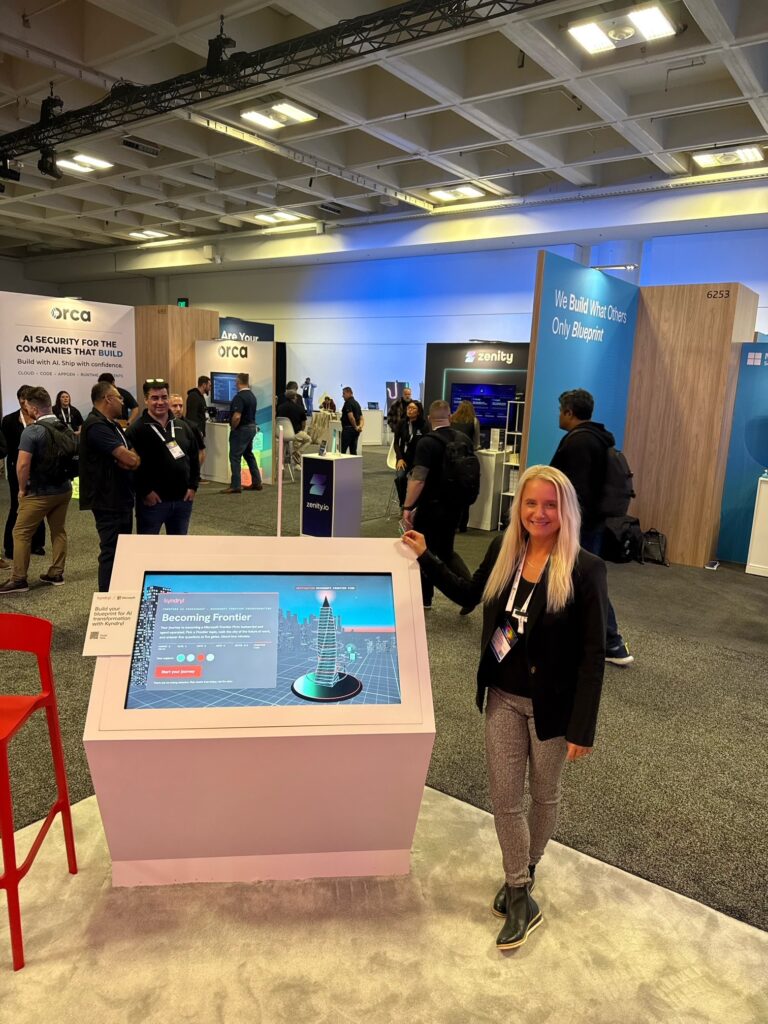
This year I also got to see something I built out in the wild. Becoming Frontier is a two-minute game we featured at the Kyndryl booth.
Between sessions, I made a point of walking the expo floor and playing other booths’ games to see what everyone else was thinking. It was a lot of fun, and I loved seeing how differently everyone approached it. Some leaned into classic arcade play, some paired the game with a short quiz, and others used it to show off agents they had built, with themes like risk assessment. Every one of them got people talking.
For mine, I wanted to pair that kind of fun with a clear outcome: something players could take back to their organization. I have sat through enough conference PowerPoint quizzes to know nobody wants to take them. So I started with the experience: a futuristic 3D city of the future of work, a flow that moves smoothly from gate to gate, and a story instead of a form.
Underneath is the part I am proudest of: a real outcome engine. You pick a Frontier topic, from the full journey to use case portfolio, AgentOps value realization, future-state architecture, agentic AI governance and security, or workforce readiness. Every answer at every gate tallies your Frontier readiness. At the end, you land in one of four stages, from the starting line to operating as a Frontier Firm. You get what your answers say about your organization, specific recommended next steps and a relevant customer story to read.
It also applies a little judgment. If your score says you are ready to scale, but you can’t say how many agents you already have running, it tells you governance comes first. You can’t scale what you can’t see.
It is the same thing I tell clients about Copilot and agents. People will engage with something that respects their time and gives them something useful back. Fun gets attention. Outcomes earn it.
What customers told us
Outside of the booth, I spent much of the week in two kinds of customer workshops, and together they gave me a clear picture of where organizations really are.
The first was Frontier Snapshot, which I co-led. It gives an organization a broad, evidence-based view of its Frontier readiness. Before the session, their admins run a read-only check of their Microsoft 365, Power Platform and Azure environments. In the room, we review what the evidence shows across value, technical foundations, digital trust and workforce, agree where they stand, and pinpoint the few barriers that matter most to scaling.
The second was the agentic workflow design session, which I ran. Each one took a single business process that causes real friction and worked through it in about an hour: how it runs today, what the future state looks like step by step, which Copilot experience fits, what it would cost to run and what it would return in time saved, and which integration and extensibility dependencies need to be planned for.
Teams that came in with their pre-work done got through all of it in the hour. Several told us they had never broken a process down that way before, and they left wanting to do more. Teams without pre-work started with a quick exercise to pick a process and pin down where the work actually gets stuck. They still reached an outcome, but they noticed the difference themselves: understanding the process from the end user’s side shapes which use case you pick and which experience you build.
Across every conversation, the message was consistent. Most organizations are still early in their maturity when it comes to becoming a Frontier Firm and getting real value from Frontier workers, but the appetite is there. What they want next is an operating model, with frameworks for:
- How a use case comes in the door and gets prioritized
- Choosing a fit-for-purpose experience instead of defaulting to the tool they know
- Measuring total cost of ownership and value
- Keeping governance front and center without slowing everything down
That is the gap I care most about closing, and it is the heart of my new session, Designing Copilot Experiences in a Crowded Toolbox.
How can we be better allies?
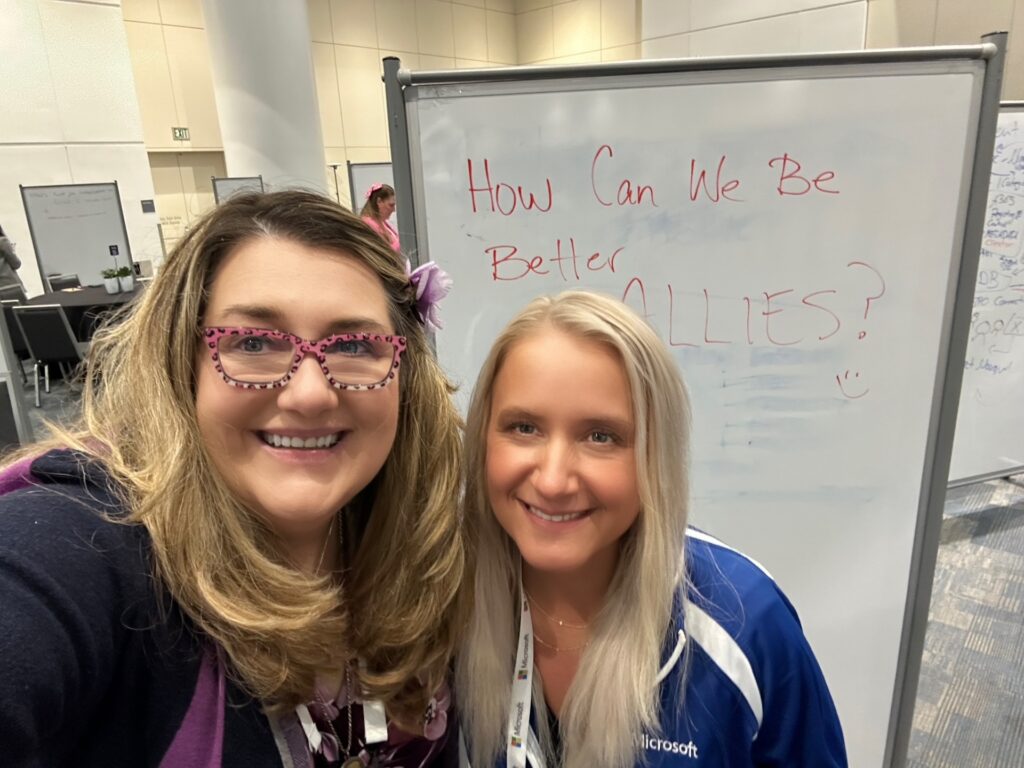
One of my favorite hours of the week had nothing to do with agents. I co-hosted a roundtable called “How Can We Be Better Allies?” with Heather Cook from Microsoft, and it was a welcome mental break from the technical deep dives.
Attendees filled the table to talk honestly about the challenges they face around allyship at work. Some raised diversity and inclusion topics they are navigating right now. Others shared stories about allies they have built over their careers, and how those relationships are sometimes perceived by other people around them.
No slides, no product announcements. Just people comparing notes on how to show up for each other. In a week full of conversations about the future of work, it was a good reminder that the people part still matters most.
The people
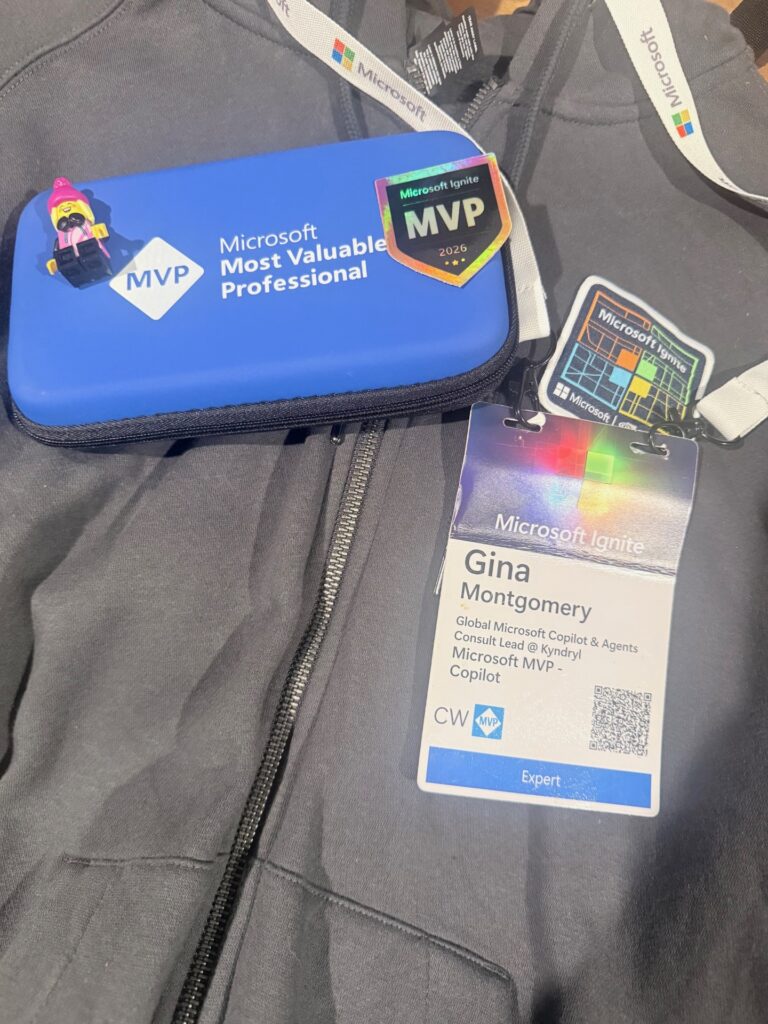
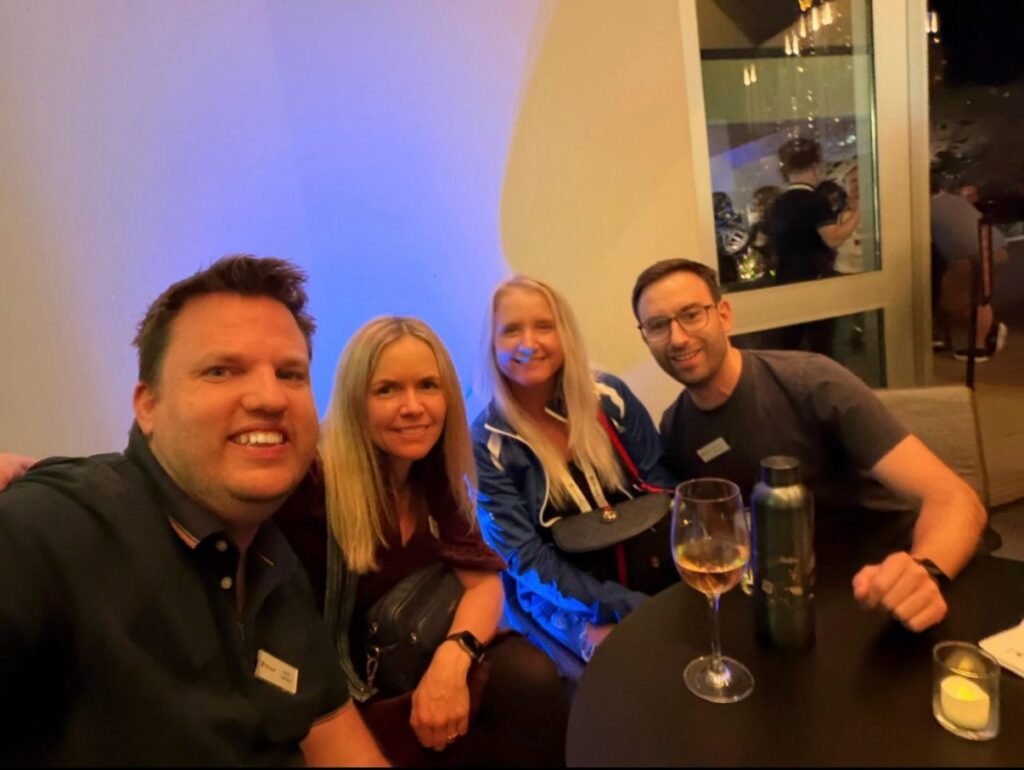
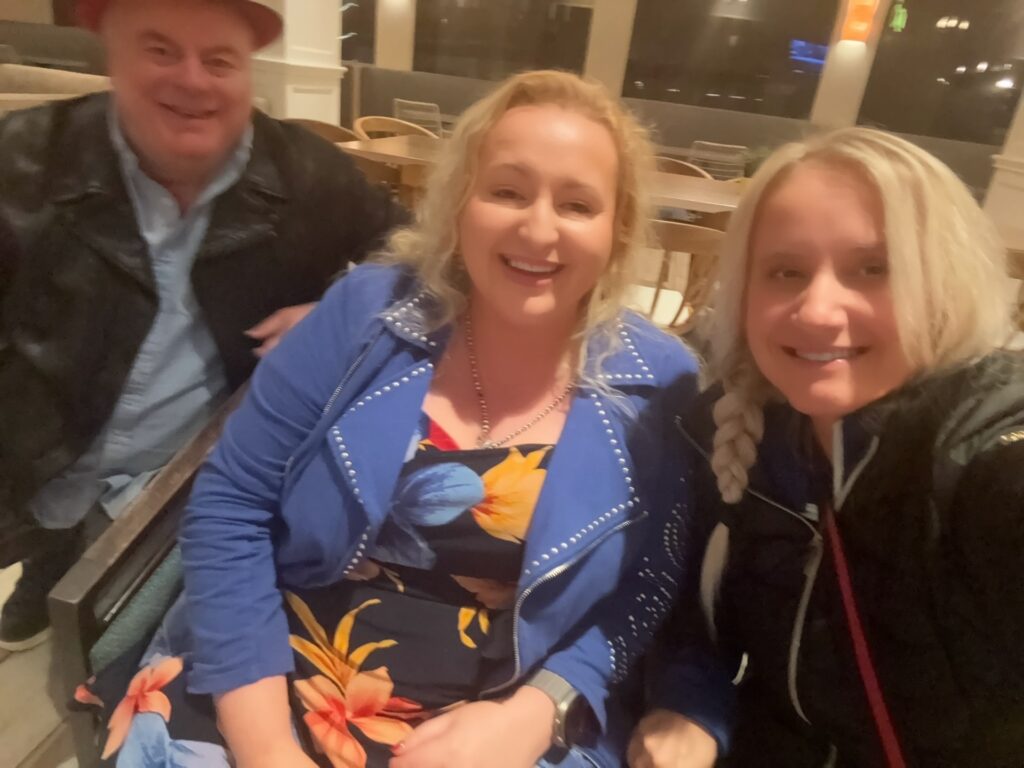
Ignite is always about the people as much as the product. This was my first Ignite as a Microsoft MVP, and I got to reconnect with old friends and make new ones at the MVP Connect social on Monday night, at the booth, and at events throughout the week.
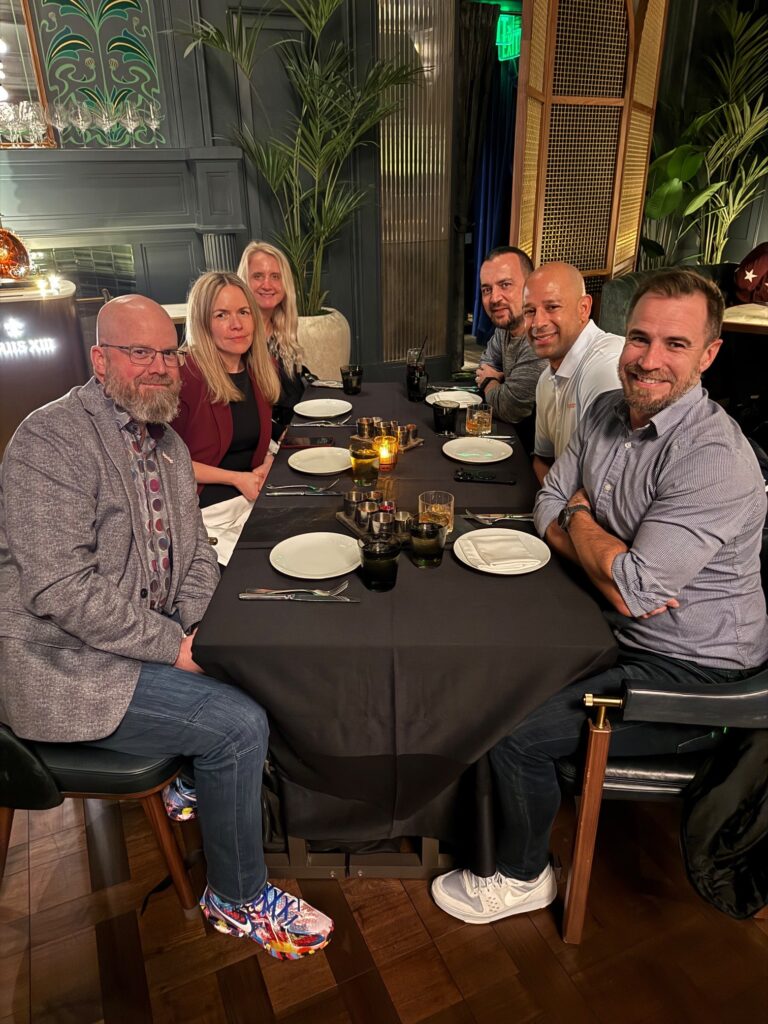
I also got real face time with my global Kyndryl team. These are colleagues I usually only see from the shoulders up on Teams calls, so sitting at the same table was a gift.
Thank you to everyone who stopped by the booth, joined a workshop or shared a table this week. You made it a great one.
The future is here. Now the work is making it useful for the people living in it.
Originally published in the AI at the Core newsletter on LinkedIn. Join the conversation there.
Leave a Reply